
Our paper "A Hybrid Magnetic Actuation System for Single-Input Multistates Stabilization: Application to pH-Responsive Drug Delivery" has been published in Advanced Intelligent Systems.Link ↗
Department of Mechanical Engineering, Pusan National University
MultiPhysics Robotics Laboratory다중물리 로보틱스 연구실
Wireless robots for minimally invasive medicine.
We combine magnetics, soft materials, mechanics and machine learning to build a new class of wireless medical robots — through novel designs, non-invasive actuation methods, and learning & control algorithms that minimize the invasiveness of diagnostic and surgical procedures.
Research
More01
Magnetic Actuation & Localization
Steering untethered robots deep inside the body with permanent-magnet arrays, electromagnetic coils and hybrid magnet arrays — and closing the loop with magnetic localization and calibration.
02
Wireless Medical Robots
Minimally invasive robots for diagnosis, therapy and implantation — soft capsule endoscopes that take biopsies, magnetic catheters, microrobotic glaucoma surgery, self-deploying neural implants and drug-delivery soft robots.
03
Soft Robotics & Grippers
Grippers and soft bodies whose stiffness and adhesion can be tuned on demand — from layer-jamming grippers that hold on underwater to self-sealing suction grippers and adaptive grippers for industry.
04
Learning-based Design Optimization
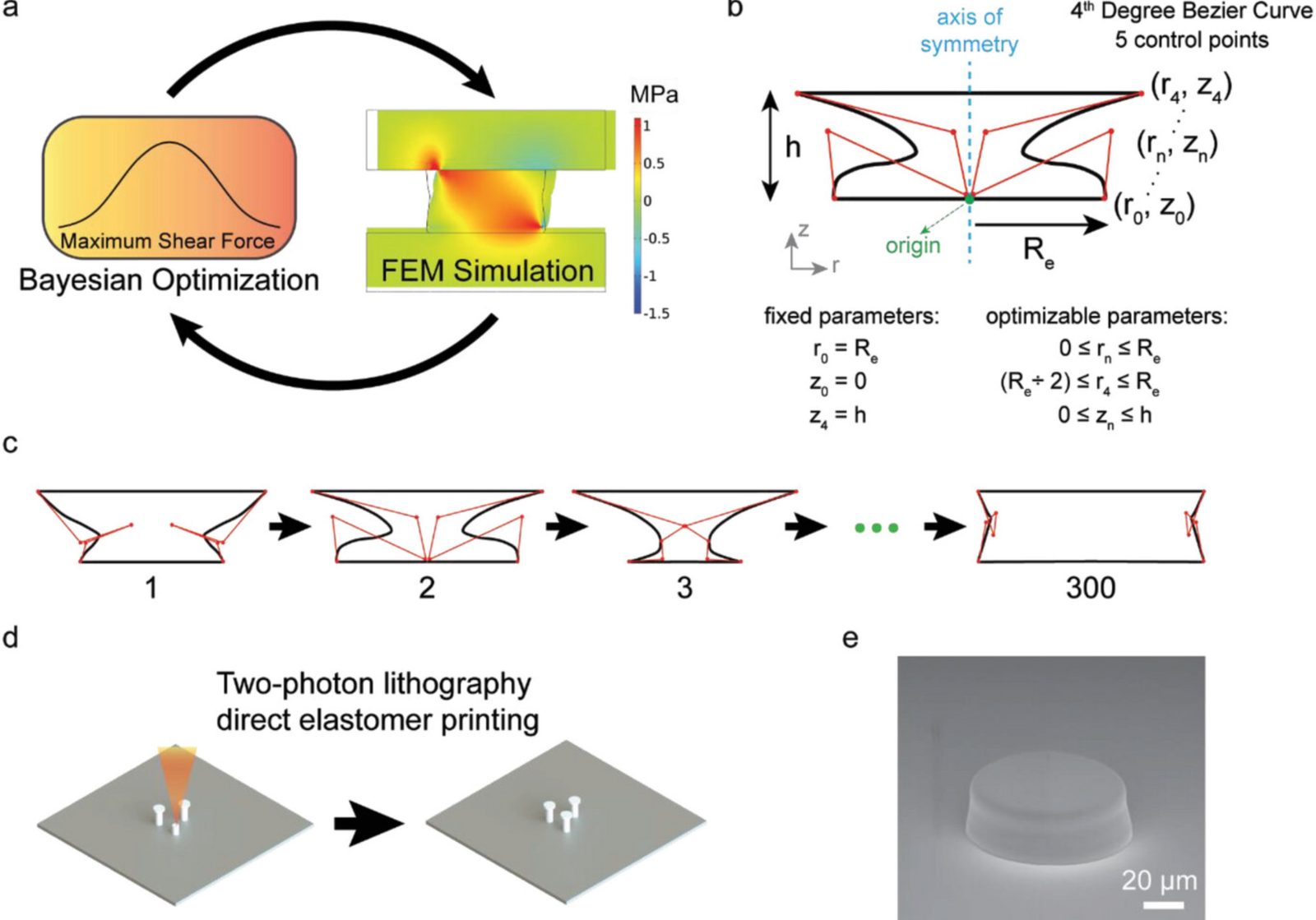
Machine learning and FEM-in-the-loop Bayesian optimization to discover designs that intuition would miss — adhesive microstructures, electromagnet layouts and magnet arrays — always validated by experiment.
Latest news
All newsCongratulations to our graduate student on graduating and joining DRB!
Our joint work with Prof. ChangKyu Yoon's group (Sookmyung Women's University), "Ecoflex-hydrogel bilayer soft robot for pH-controlled drug protection and delivery", has been published in Materials Today Bio.Link ↗
The lab attended the Korea Robotics Society Annual Conference (KRoC 2026).
We started a new project, "Magnetic microrobotic surgery system for precision treatment of congenital glaucoma" (2026–2030), funded by the Lee Kun-hee Pediatric Cancer & Rare Disease Program.
We started a new NAVER-funded project on real-time intraocular pressure monitoring and adaptive glaucoma therapy via micro-robotic tube implantation in the anterior chamber (2026–2028).
Selected publications
All publicationsA Hybrid Magnetic Actuation System for Single-Input Multistates Stabilization: Application to pH-Responsive Drug Delivery
Advanced Intelligent Systems, e70531 (2026) · †Co-corresponding authors
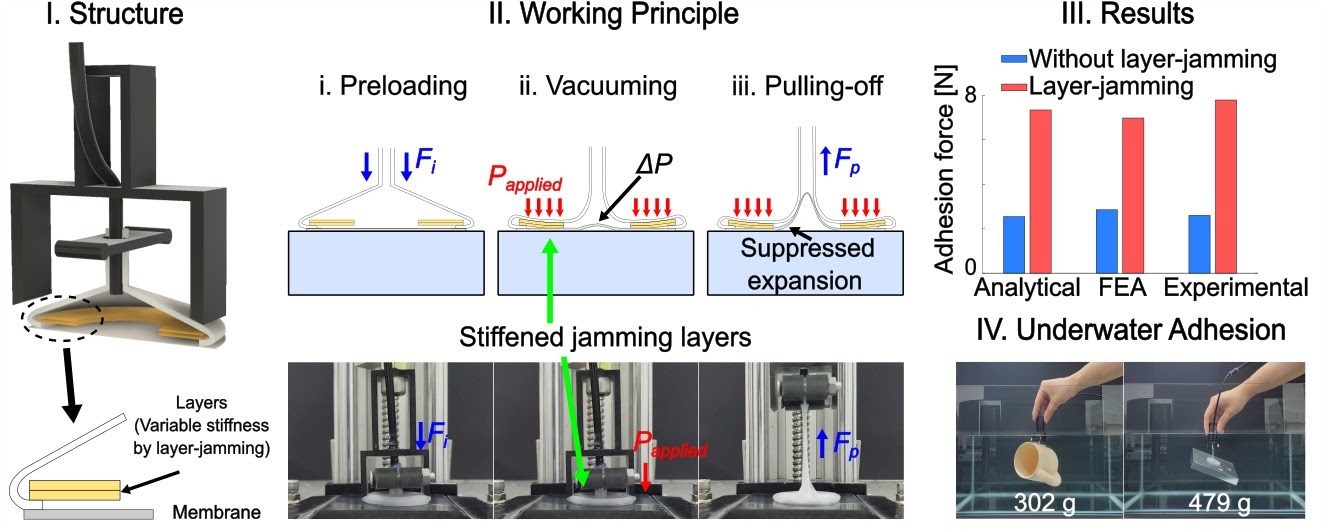
Layer-jamming soft gripper for improved stiffness control and underwater adhesion
Extreme Mechanics Letters, 77, 102322 (2025)
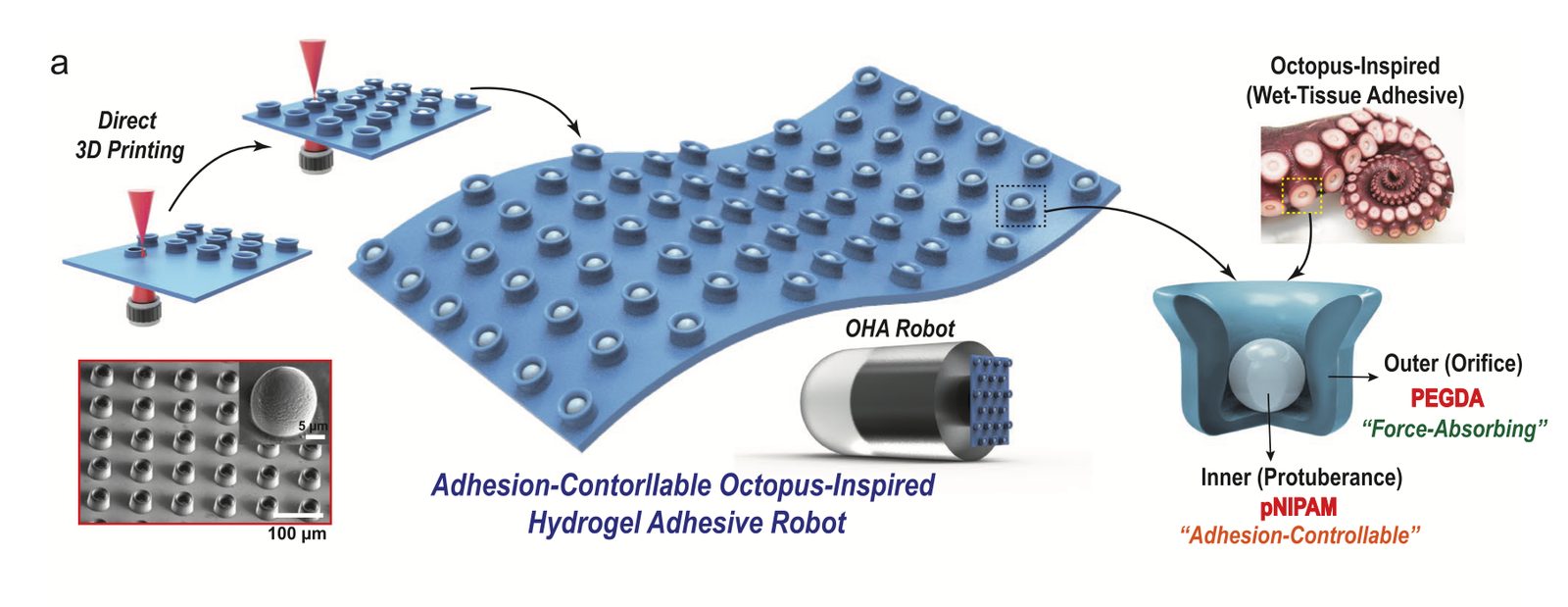
A tissue adhesion-controllable and biocompatible small-scale hydrogel adhesive robot
Advanced Materials, 34(13), 2109325 (2022) · *Equal contribution

Permanent magnet array–driven navigation of wireless millirobots inside soft tissues
Science Advances, 7(43), eabi8932 (2021)
Supported by
- Lee Kun-hee Pediatric Cancer & Rare Disease Program
- NAVER
- National Research Foundation of Korea (NRF)
- Hanwha Aerospace
- Advanced Robotics Workforce Development Program
- LG Electronics
- Agency for Defense Development (ADD)
We're looking for students
If you want to design, build and test robots yourself, get in touch.